News & Insights
What is Agentic AI?
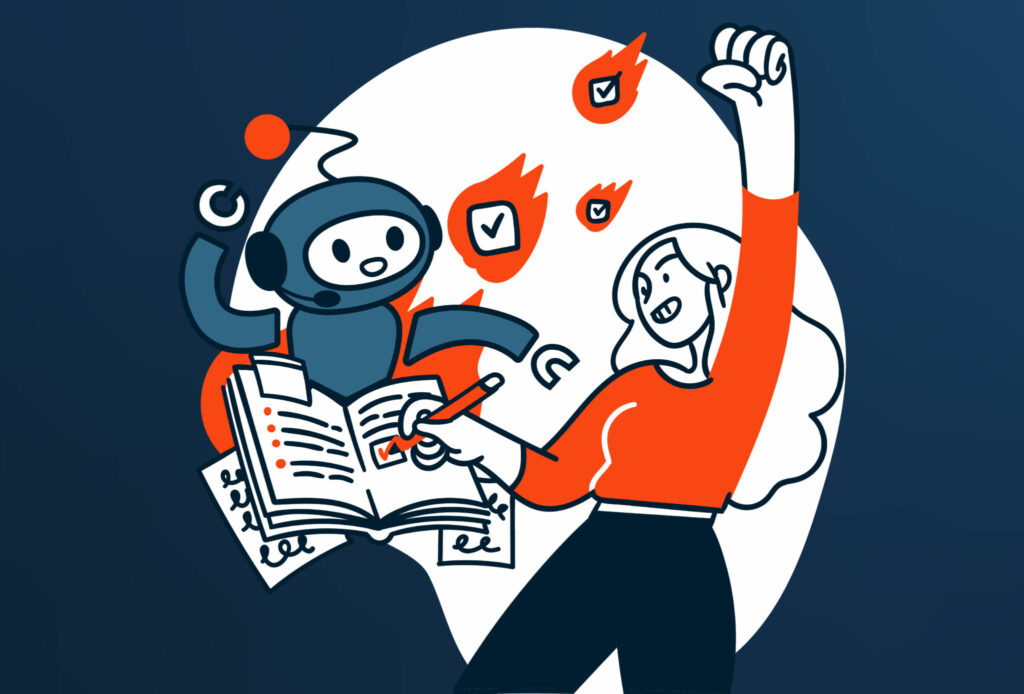
Unlocking the future of business efficiency and innovation
It’s no secret, artificial intelligence (AI) has been a transformative force for years, but according to Gartner’s 2025 Top Strategic Technology Trends Report, it’s agentic AI that’s poised to be a key driver for AI-related digital transformation in 2025.
As AI enters its latest phase of evolution, agentic AI could potentially redefine how businesses operate. Indeed, unlike traditional AI models that rely heavily on human prompts, agentic AI agents are autonomous systems, capable of independently assessing situations, making decisions, and executing tasks with minimal supervision. These AI systems go beyond traditional machine learning models, as they are capable of planning, reasoning, and executing tasks in dynamic settings.
Perhaps it goes without saying that this shift away from human intervention has the potential to transform business processes, increase efficiency, and open new avenues for innovation. Still, there’s a lingering uneasiness/indecisiveness when it comes to adopting AI – driven by understandable concerns around job displacement, ethical implications, data privacy, and the potential loss of human control. Because of this, it’s likely that organisations will turn to managed service providers (MSPs) for support in navigating this transformation in a safe and responsible way.
Below we’ll explore the potential benefits, market trends, and practical steps for adopting agentic AI within your organisation.
Agentic AI: market trends and statistics
The demand for AI-driven automation is accelerating across industries, driven by the need to improve productivity, optimise costs, and enhance decision-making.
- Market growth: The global market for AI agents is expected to grow from $5.1 billion in 2024 to $47.1 billion by 2030, with a CAGR of 44.8% (MarketsandMarkets, 2024).
- UK readiness: The UK ranks among the top AI-ready nations, with an AI readiness score of 65.5, exceeding the G7 average of 61.2 (Artificial Intelligence News, 2024).
- Microsoft’s role: Over 100,000 organisations have adopted or developed AI agents within Microsoft’s ecosystem, demonstrating its dominance in this space (Microsoft AI Insights, 2024).
- Workplace impact: Gartner predicts that by 2028, at least 15% of work decisions will be autonomously managed by AI, up from 0% today.
Potential benefits of agentic AI for UK businesses
Agentic AI is set to deliver a wealth of advantages to businesses, enabling them to scale operations, optimise workflows, and unlock new strategic capabilities. Below are some of the key benefits:
Increased productivity and efficiency
Agentic AI agents can automate repetitive and manual tasks, freeing employees to focus on higher-value activities. For example, Microsoft Copilot Studio enables businesses to create AI-driven workflows that handle customer interactions, schedule meetings, and generate reports autonomously.
Enhanced decision-making with real-time insights
By leveraging data at scale, AI agents can provide actionable insights for better decision-making. Tools like Microsoft Fabric and Azure AI facilitate real-time analysis, allowing businesses to make informed choices that drive growth.
Cost optimisation and resource allocation
Automating routine processes reduces overhead costs and maximises resource utilisation. Companies implementing AI agents in IT service management have reported up to a 40% reduction in operational costs (Forrester Research, 2024).
Scalability and flexibility
AI agents are designed to scale seamlessly across business functions. Whether in customer service, HR, finance, or IT support, these agents can adapt to varying workloads without compromising efficiency.
Stronger cyber security and risk management
Microsoft Copilot for Security is an example of how agentic AI enhances cyber security by autonomously detecting and mitigating threats in real time. Such solutions reduce response times to cyber threats, improving overall business resilience.
How to begin adopting agentic AI
[textframe]The transition to AI-driven automation requires a structured approach to ensure successful implementation and long-term value. A phased adoption strategy, supported by robust change management, is likely to minimise disruption and maximise efficiency.
Your journey may include the following:
Assess your business needs
Identify which areas of your business can benefit the most from AI automation. Consider functions like customer service, IT helpdesk, HR, and financial operations as initial use cases.
Leverage Microsoft’s AI ecosystem
Microsoft provides a robust platform for agentic AI development and deployment, including tools like:
- Microsoft Copilot: AI-powered automation for Microsoft 365 apps.
- Azure AI Services: Machine learning and analytics for advanced AI capabilities.
- Power Automate: Workflow automation using AI-driven logic.
Implement a pilot project
Before a full-scale rollout, test AI adoption through small pilot projects. For example, implementing AI-driven chatbots for IT support can provide measurable insights into its impact before scaling.
Ensure ethical AI use and governance
As AI becomes more autonomous, businesses must establish clear ethical guidelines to govern its use. Transparency, accountability, and compliance with UK regulations (such as the AI Regulation Bill) are essential to maintaining trust and security.
Train and upskill employees
Remember, AI should augment, not replace, human expertise. Provide training to help employees collaborate effectively with AI tools, ensuring a smooth transition to an augmented workforce.
Monitor, optimise, and scale
Continuously track AI performance and optimise based on data insights. As the business gains confidence in AI capabilities, expand its deployment to other departments and business functions.
Conclusion
The adoption of agentic AI represents a significant opportunity for UK businesses to drive efficiency, innovation, and competitive advantage. With the UK well-positioned as a leader in AI adoption and Microsoft offering an extensive ecosystem for AI development, now is the time for organisations to take strategic steps towards integrating agentic AI solutions.
At Littlefish, we specialise in helping businesses harness the power of AI within the Microsoft ecosystem. Whether you are looking to optimise IT service management, automate workflows, or enhance cyber security, we’re on hand to support your AI transformation journey.
Are you ready to explore the potential of agentic AI for your business? Contact Littlefish today to learn how we can help.