News & Insights
The Future of Work for Managed IT Services
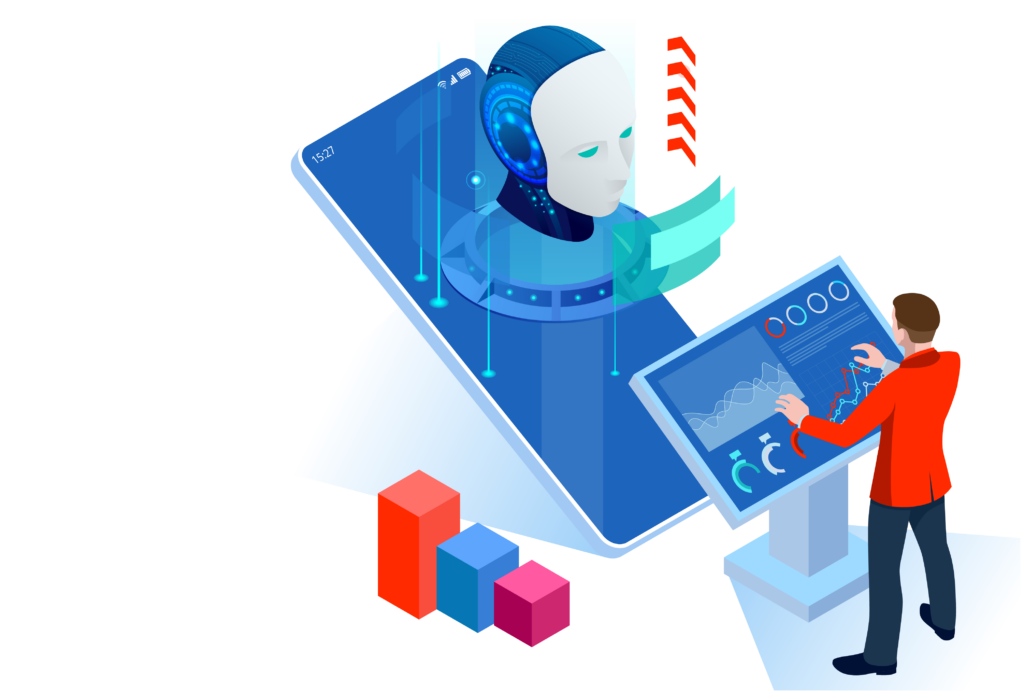
The world of work is undergoing one of the most significant shifts since the advent of the internet. Rapid advances in artificial intelligence, automation, and digital experience design are reshaping – not only how organisations operate – but how people even interact with technology in their everyday roles. For some time now, the modern workplace hasn’t been a fixed location or predictable set of processes; instead, it has become an evolving ecosystem of platforms, data flows, devices, and human behaviours.
As the world of work continues to transform, the pressure on technology teams is growing too. People now expect the same smooth, consumer grade experiences at work that they’re used to in their everyday lives. Organisations, meanwhile, are looking for greater agility, resilience, and efficiency. Leaders too want clearer insight, not just outputs, and, across the board, we’re all leaning more heavily on digital tools to help us work, communicate, and create value.
All this to say, this is a shift reshaping what it means to be a Managed Service Provider (MSP). For years, MSPs were defined by break-fix support, incident response, and keeping the lights on. These days, while that work still matters, the expectations are different. The real question now is: how can technology services not just keep up with the future of work, but actively enable it?
The answer lies in a new kind of MSP and a new kind of partnership with the organisations MSPs serve. This will bring together smart automation, human centred thinking, and the ability to adapt as workplaces continue to evolve. It’s about blending intelligence with experience and making sure every layer of the digital workplace works better for the people who rely on it.
Below we’ll look at the capabilities shaping the next generation of MSPs.
Break–fix to reactive operations
As touched upon earlier, the days of purely reactive support are fading. With data now spread across cloud platforms, devices, collaboration tools, and observability systems, organisations finally have the ability (and the need) to spot issues before they surface.
Naturally, AI sits at the heart of this shift. Machine learning can pick up anomalies in real time, predict capacity challenges, highlight emerging vulnerabilities, and recognise patterns long before users feel any impact. Intelligent automation can quietly resolve hundreds of routine issues behind the scenes, and virtual agents can handle high-volume requests instantly, giving people quicker, more consistent support.
This move, from reactive to anticipatory operations, unlocks huge value: downtime drops, frustration eases, and service quality becomes more consistent. IT teams also regain the time and space to focus on the work that truly moves things forward, things like project delivery, innovation, and deeper engineering challenges, instead of constant firefighting
Ultimately, the organisations that get ahead will be those that treat data not as an exhaust of operations, but as fuel for proactive, insight led performance.
Data in motion: turning information into foresight
Every device, workflow, and interaction within the digital workplace generates data – far more than most organisations meaningfully use today. You see, the challenge isn’t scarcity, but fragmentation and noise.
Future-focused MSPs are increasingly building capabilities around data in motion: processing, analysing, and acting on information in real time. This means:focused MSPs are increasingly building capabilities around data in motion: processing, analysing, and acting on information in real time.
This means:
- Detecting subtle behavioural patterns that indicate emerging IT issues
- Analysing experience telemetry to understand how users interact with their environment
- Using predictive models to forecast service demand and performance risks
- Turning operational complexity into clarity, insight, and action
The digital workplace now operates at a speed that requires intelligent systems to interpret and respond continuously. As this becomes standard, analytics will shift from dashboards and reports to embedded intelligence woven through the entire service delivery model.
Human-centred, experience-led service design
While AI and automation continue to reshape the backbone of IT operations, the defining feature of the future workplace is still very human, remaining in the quality of the user experience.
Remember, people want technology that feels natural to use – that means tech that is intuitive, instant, and personalised – so they can focus on the work that matters to them.
Users expect tools that ‘just work’, invisibly and smoothly, and they expect support that feels easy rather than procedural. These expectations are driving a shift from traditional service desks to more rounded experience hubs; places where virtual agents, self-service, proactive outreach, and high touch human support come together. Here, knowledge becomes easier to find, support journeys feel smoother, and technology becomes a quiet enabler of productivity, not a point of friction.
It’s important to note that human-centred design isn’t simply a ‘nice-to-have’ inside the future of work. It’s the connection point between smart automation and meaningful value, the very element making sure every interaction feels considered, supportive, and designed around real people.
The rise of human–machine collaboration
As automation takes on more of the routine, repetitive tasks, it’s creating space for something far more meaningful – not the replacement of human roles, but the elevation of them. Technology is stepping in to handle the heavy lifting, so people can focus on work that requires judgement, creativity, and connection.
New roles are already emerging within the MSP ecosystem: AI operations engineers, automation developers, cyber-AI analysts, knowledge curators, experience specialists, and much more. These are the people shaping and guiding intelligent platforms, making sure the technology we rely on stays responsible, transparent, and aligned with what organisations need.
This shift signals a move away from labour intensive, reactive support and leans towards high impact problem solving and deeper, more strategic contribution. It also reinforces a simple (and perhaps comforting) truth: the future of managed services won’t be about reducing the human footprint. It will be about giving people the opportunity (and the tools) to do their best work.
The new MSP: intelligent, connected, human
Taken together, the above points suggest an entirely new MSP model, one defined not by ticket handling or infrastructure uptime, but by intelligence, adaptability, and experience. In short, the next generation MSP will be:
- Anticipatory, not reactive – self-healing, predictive, and deeply data-driven.
- Embedded with AI at every layer – from virtual agents to automated remediation and advanced analytics.
- Experience-centred – focusing on empowerment, clarity, and friction-free interaction.
- Human-machine collaborative – with teams skilled in orchestration, insight, creativity, and design.
- A catalyst for business outcomes – not just keeping systems running, but enabling performance, resilience, and innovation.
This evolution goes far beyond a technology upgrade. It marks a fundamental shift in how value is created, delivered, and experienced through digital services.
At the same time, the pace of transformation is increasing. Generative AI, self-optimising infrastructure, autonomous orchestration, and ambient experience technologies are moving quickly from concept to capability. Organisations that embrace these changes early will be better placed to enhance employee experience, reduce operational risk, strengthen service resilience, improve productivity, and accelerate innovation.
Those that continue relying on reactive, legacy models will find it increasingly difficult to keep up.
The future of work calls for a service ecosystem that can learn, anticipate, and evolve at the same pace as the organisations it supports.
Final thought
At Littlefish Group, the future of work described here isn’t something we’re waiting for, it’s something we’re already building. While the wider shifts across the industry shape the landscape, our journey is very real and very, very present.
We’re already designing services around intelligent automation, realtime insight, people-first experience design, and deep technical expertise. Our focus is simple: to help organisations move from reacting to issues to anticipating needs, creating digital workplaces that feel resilient, empowering, and genuinely transformational.
If you’re exploring how to prepare your digital workplace for the future of work, get in touch – we’d be happy to start that conversation with you.