News & Insights
Microsoft 365 E7 and the Future of AI at Work
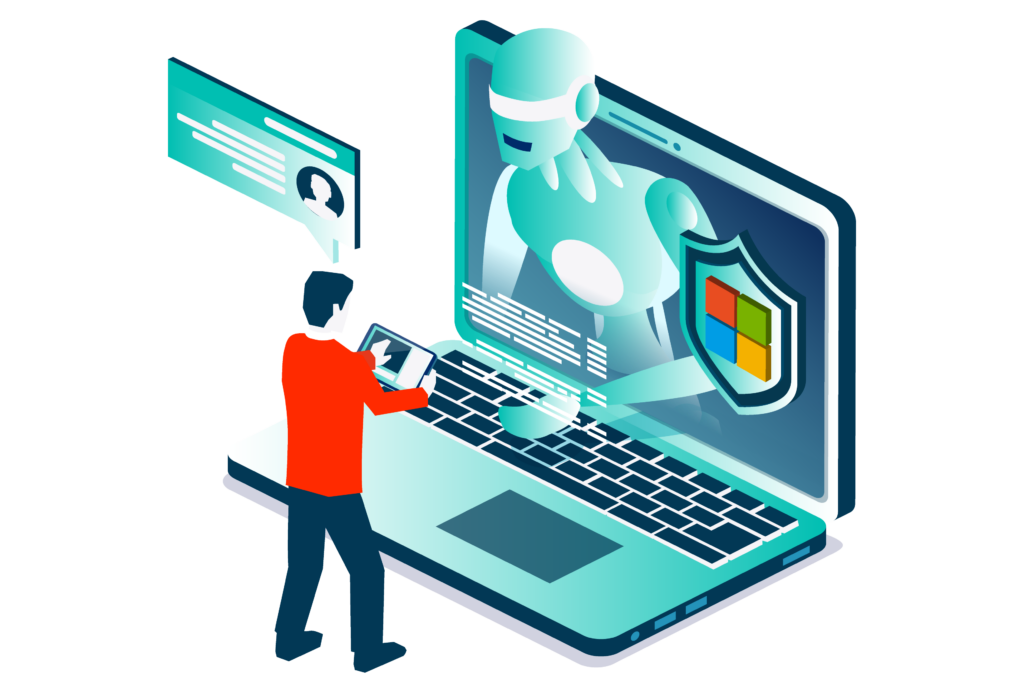
Microsoft’s announcement of Microsoft 365 E7 (generally available on 1st May 2026) marks a clear shift in how the company expects organisations to adopt and scale AI. More than simply another licensing tier, E7 is a statement of intent: AI is no longer something to pilot at the edges of the business; it’s becoming part of the core digital workplace. As such, it needs to be governed, secured, and managed accordingly.
For organisations that have spent the last year experimenting with Copilot, proofs of concept, and early AI use cases, E7 represents a move from curiosity to commitment. For Microsoft partners like Littlefish Group, it reflects what we hear from customers all the time. That the organisations that succeed with AI aren’t just the ones with the latest technology – they’re the ones that have built trust, put the right controls in place, and have the operational maturity to use AI confidently in everyday work.
What Microsoft 365 E7 changes
At a practical level, E7 brings together several elements that, until now, have often been bought, deployed, and managed separately. It combines the full Microsoft 365 E5 security and compliance foundation with Copilot, advanced identity and access controls, and new AI agent governance capabilities under a single, top tier licence.
The shift means that Microsoft is recognising that AI is moving beyond individual productivity tools and into something more agent-driven and autonomous. As AI agents start to act alongside human users – accessing data, triggering workflows, and making recommendations – organisations need stronger visibility, clearer controls, and a consistent governance model.
E7 is designed to remove a lot of the friction organisations have felt up to now. Copilot is no longer something you add on later but becomes part of how people work day-to-day. At the same time, governance is built in rather than bolted on, so security, compliance, and identity are there by design, not as an afterthought.
What this means for customers
For many organisations, the biggest barrier to AI adoption hasn’t been ambition, but confidence. Leaders are keen to unlock productivity and insight from AI, but they also want reassurance around data protection, identity, compliance, and how all of this will work over the long term.
E7 is Microsoft’s response to that tension. By bringing Copilot into the core licence and aligning it with enterprise grade security and identity services, Microsoft is making it clear that AI is intended for every day, real world use – not just safe pilots or proofs of concept. At the same time, the inclusion of AI agent governance acknowledges a growing concern: AI that can act without oversight introduces new risks if it isn’t managed properly.
Moving from experimentation to operating model
One of the most important shifts E7 represents is the move away from isolated AI pilots and towards a more AI ready operating model.
Many organisations have already proven that Copilot can save time, reduce admin, and help people work more efficiently. What they haven’t always had the chance to work through is how AI fits into the bigger picture, i.e., their processes, controls, and day-to-day ways of working. Questions around identity, data boundaries, role-based access, and accountability often only emerge once those early wins are in place.
E7 brings those conversations forward. Rather than asking, “Where can we trial AI?”, organisations are instead prompted to ask, “How do we run AI safely and confidently at scale?”.
That shift is a positive one, but it also highlights that successful adoption takes more than a licence change alone.
Trust, governance, and the human factor
One of the most interesting aspects of Microsoft 365 E7 is what it says about the direction of travel. This isn’t just about more AI capability. It’s about recognising that intelligence and trust must move forward together.
AI that can reason, act, and automate at scale is powerful. Without the right controls, it’s also risky. E7 acknowledges that governance, visibility, and identity are not blockers to innovation, they’re what make innovation sustainable.
For customers, that means success with E7 won’t come from switching licences alone. It will come from taking a deliberate approach to readiness, culture, and operating model. For partners like Littlefish, it reinforces our role as a trusted advisor – helping organisations move forward with confidence, not just speed.
Is Microsoft 365 E7 right for you?
Microsoft 365 E7 won’t be the right fit for every organisation, and that’s an important thing to say upfront. It’s designed for organisations that are ready to move beyond small‑scale AI experiments and start embedding AI into everyday work in a more deliberate, governed way.
E7 is likely to make sense if you’re already using Microsoft 365 E5, actively exploring or piloting Copilot, and beginning to see demand for AI use cases that span teams, roles, or business processes. It’s particularly relevant where security, identity, and compliance are non‑negotiable, and where leaders want confidence that AI can scale without introducing unmanaged risk.
On the other hand, it may be less appropriate for organisations that are still early in their cloud or security maturity journey, or where AI use is limited to a small group of users with no clear plan to expand. In those situations, focusing first on the fundamentals – data quality, identity, security, and user readiness – is often a more effective starting point.
Ultimately, the question isn’t just whether E7 offers more features. It’s whether your organisation is ready to run AI as part of the core digital workplace, with the right controls, governance, and support around it. For many customers, the real value of E7 won’t come from the licence alone, but from the clarity it brings to how AI is adopted, managed, and trusted across the organisation.
Whether you’re at the start of your AI journey or thinking about how to scale what’s already in place, now is a good time to take stock. Get in touch to talk through what E7 could mean for your organisation and what a confident next step looks like.