News & Insights
Microsoft Enterprise Licensing Is Changing: What You Need to Know
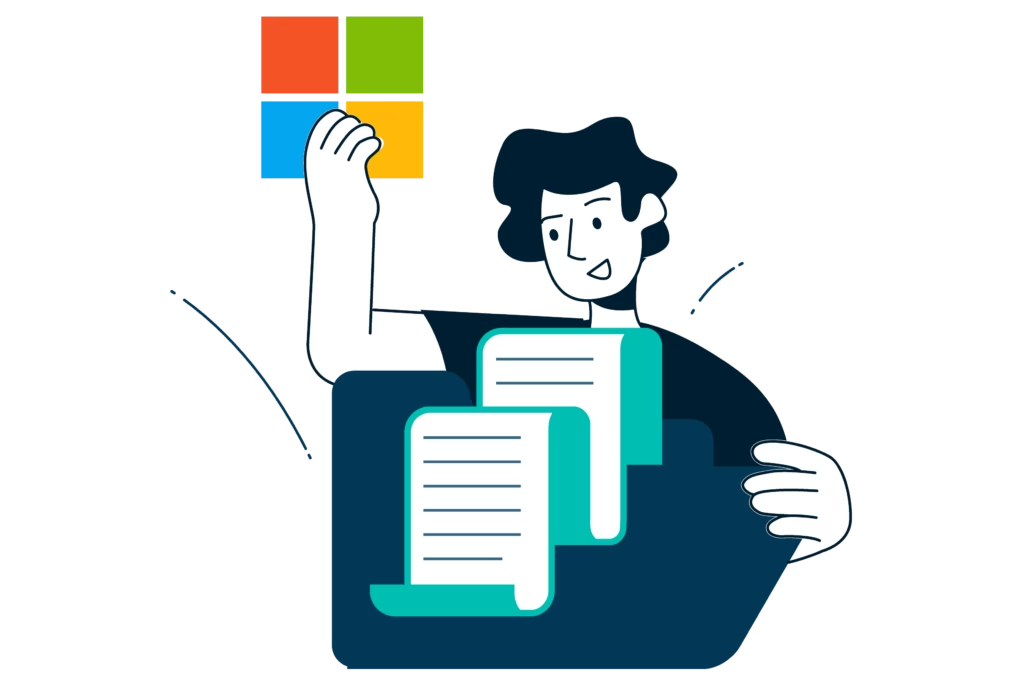
From 1st November 2025, Microsoft will retire its traditional volume-based pricing tiers under the Enterprise Agreement (EA), reshaping how organisations buy and manage online services like Microsoft 365, Dynamics 365, and Power Platform. The shift marks a strategic pivot towards more flexible purchasing models, with customers now expected to transition to either the Cloud Solution Provider (CSP) programme or the Microsoft Customer Agreement for Enterprise (MCA-E).
In short, this is a clear message to review your licensing strategy now or face disruption later (please note: these changes are applicable only to Commercial customers and do not apply to Government or Education sectors).
Below are some key points to be aware of ahead of the shakeup:
Standardised pricing: the end of volume discounts
From 1 November 2025, all online services purchased under Enterprise Agreement (EA), Microsoft Products and Services Agreement (MPSA), and Online Services Partner Agreement (OSPA) contracts will be priced according to the public Microsoft.com price list. This marks the end of the familiar tiered discount structure (Levels A–D), which previously rewarded larger organisations with significant cost savings.
In practice, this means organisations that once benefited from deep discounts – especially those on Level D pricing – could see price increases of up to 12–15%. For many, this change will obviously have a direct impact on budgeting and procurement strategies.
In scope, this change applies specifically to cloud-based services, e.g., Microsoft 365, Dynamics 365, and Power Platform. Pricing for on-premises software remains unchanged and will still be subject to volume discounts.
Strategic shift to Cloud Solution Provider (CSP)
Microsoft is actively guiding organisations toward the CSP programme with the benefits of this becoming harder to ignore. With the introduction of 3-year term licences and expanded support options, CSP is emerging as a more flexible and customer-friendly alternative to traditional licensing routes.
Behind the scenes, Microsoft has also reshaped partner incentives to accelerate this shift. Rebates for EA partners have been significantly reduced, while CSP incentives have been boosted, making it much more rewarding for partners (like Littlefish) to deliver value through CSP.
For customers, though, this means more than just a change in billing. It’s also a chance to work with partners who are now better equipped (and motivated!) to offer enhanced support, tailored services, and long-term strategic value.
Impact on renewals
Organisations will feel the impact of these changes at their next renewal or when purchasing online services not already listed on their Customer Price Sheet (CPS). If new services are not added to the CPS before 31 October 2025, they will be subject to the new standardised pricing.
Notably, some organisations with existing “Cloud EA” agreements may have found themselves already ineligible for renewal under the current framework as early as January 2025. This was expected to push the shift towards the MCA-E. However, to avoid unexpected costs or service interruptions, businesses should still proactively review their licensing arrangements now and begin planning transitions well ahead of renewal dates.
Microsoft is actively notifying affected customers, with the expectation that organisations will complete their transition to the new model by the end of 2025. To retain current discount levels for new online services, organisations should add them to their Customer Price Sheet before 31 October 2025 since, after this date, all new purchases will be subject to standardised pricing.
Recommended actions:
- Review Current Usage: Audit how online services are used across your organisation to inform licensing decisions.
- Evaluate Alternatives: Explore CSP and MCA-E options before your next renewal.
- Seek Expert Advice: Consult with licensing specialists or trusted Microsoft partners to assess the impact and develop a strategic plan.
- Consider Early Renewals: While early renewals may help lock in current pricing, Microsoft may deny requests that conflict with their strategic direction.
Microsoft 365 and Teams
Coinciding with these changes, Microsoft will reintroduce Microsoft 365 suites bundled with Teams globally from 1 November 2025. Organisations will be able to choose between suites with or without Teams, allowing for more tailored collaboration strategies. Suites without Teams will be priced lower, while the standalone Teams Enterprise licence will see a price increase of $3.30 (about £2.44 at time of writing).
Blended Licensing
Additionally, Microsoft’s blended licensing model allows customers to mix and match licence durations and types, offering greater flexibility but therefore requiring more active management from business leaders and/or their managed service providers. The three-year term now includes most Dynamics licences, expanding options for longer-term commitments.
These changes are part of Microsoft’s broader effort to address regulatory concerns and support a more open ecosystem. Key pillars include interoperability, data portability, and developer enablement. Customers will benefit from continued access to open APIs, export capabilities for Teams data, and a new centralised resource hub for developers.
Helping to navigate complexity
While increased flexibility is always welcome, Microsoft’s new licensing landscape introduces complexity for IT and procurement teams. Understanding the cost implications and operational impact is, of course, critical and Littlefish is already working with customers to model scenarios, optimise renewals, and build resilient collaboration roadmaps.
For leaders focused on agility, cost-efficiency, and collaboration, these changes offer new levers to pull – but with choice often comes confusion, and organisations that act early will be best positioned to benefit.
If you’d like to explore how changes to Microsoft licensing could benefit your organisation, or simply learn more about leveraging the Microsoft technology stack, please get in touch with our Microsoft experts using the ‘get in touch’ button on this page.