News & Insights
Modernising IT for Cyber Resilient Growth in Energy & Utilities
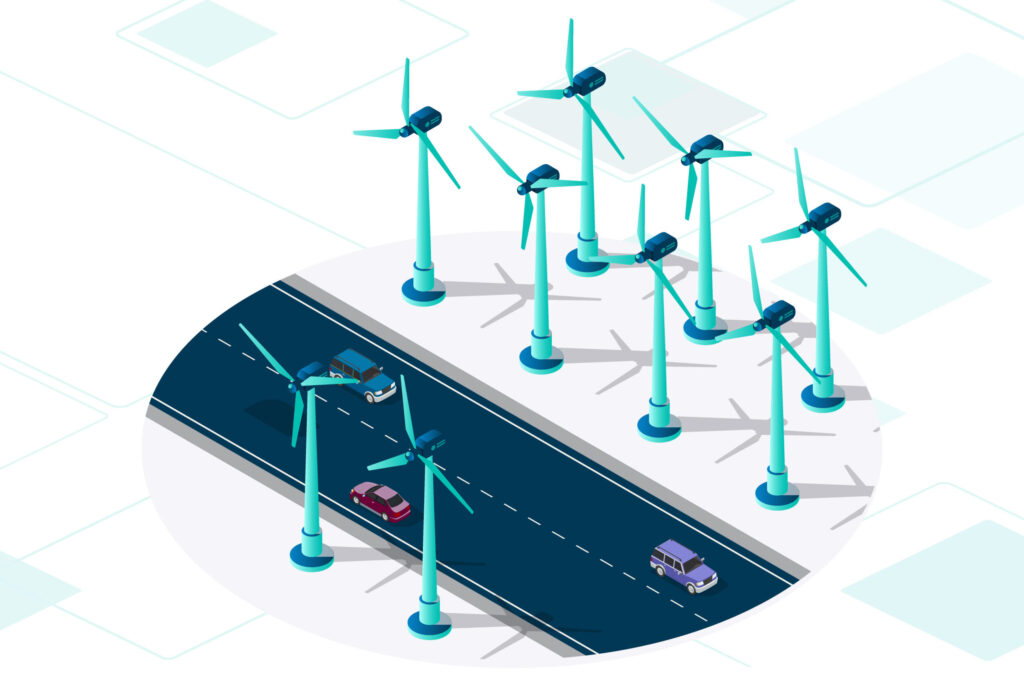
The energy & utilities sector is in the midst of a major digital transformation, one that’s reshaping how organisations operate, serve customers, and plan for the future.
While maintaining and upgrading physical infrastructure remains a core challenge, there’s now added pressure to digitise whilst ensuring cyber resilient operations, enhancing customer experiences, and accelerating progress toward net zero. It’s a lot to juggle, and it’s happening all at once. Amid this transformation, though, one theme stands out as essential to both stability and progress – and that’s business resilience.
As part of the UK’s Critical National Infrastructure (CNI), energy & utilities carry a unique responsibility; not just to keep the lights on, but to ensure continuity and confidence in the systems that underpin daily life. Traditionally, resilience in utilities has meant strong engineering and built-in redundancy across physical networks. But today, it also includes the resilience of digital information systems – the IT that often determines whether a business can truly weather disruption and keep moving forward.
The legacy challenge: how can utilities overcome outdated IT systems?
Energy & utilities often rely on IT systems that were built for a very different time. These legacy environments also support critical functions like billing, asset management, and operational control, and while, yes, they’ve delivered stability over the years, they’re now showing signs of strain …
The issue is legacy systems tend to be complex, heavily customised, and difficult to update without introducing risk. Recovery processes are usually slow and manual, data lives in silos, and connecting with modern applications can be a real challenge. Since customers and regulators today expect speed, reliability, and transparency, these limitations pose real risks. Prolonged outages can cause serious reputational damage, and the financial impact of downtime is only growing.
For business leaders, the challenge here is not just technical but strategic. Legacy systems can constrain transformation programmes, absorbing resources in maintenance and leaving little capacity to invest in innovation. They also create uncertainty (since few leaders can be fully confident about how these systems will respond under stress). Addressing this challenge requires more than incremental upgrades. It calls for a deliberate approach to resilience that positions IT as a driver of future capability.
How can resilience serve as a strategic enabler?
In recent years, resilience has too often been treated as a matter of compliance. Plans were written to satisfy regulators or auditors, filed away, and occasionally tested – a mindset that no longer fits the world we’re in. With rising cyber threats, more frequent extreme weather events, and growing expectations from customers and regulators alike, resilience needs to be seen as a living, breathing capability; something that’s always on, always evolving.
Remember, it’s not just about surviving disruption anymore. It’s about being ready to adapt, recover quickly, and even grow stronger through challenge. Modern resilience strategies tap into the power of cloud technologies, automation, and orchestration – helping energy & utilities move from static recovery plans to dynamic, responsive operations.
Instead of simply asking, “How do we get back online?” organisations and their service providers can design systems that prevent issues from escalating, bounce back faster when things go wrong, and learn from every incident. The result is an IT environment that supports innovation and transformation, rather than holding it back
How can cloud-based backup and recovery solutions enhance resilience for energy & utilities organisations?
One area where this shift is especially clear is in how organisations approach backup and recovery. In the past, disaster recovery usually meant maintaining dedicated secondary sites which were expensive, hard to scale, and rarely used until something went wrong. Today,cloud-based solutions offer a much smarter, more flexible alternative. They allow data and applications to be replicated across multiple regions, dramatically reduce recovery times, and scale resources as needed – all without the cost of keeping them idle.
One of the most powerful advantages ofcloud-based resilience is the ability to spread data and services across multiple geographic locations. This means a localised issue, e.g., a severe weather event or technical failure, can’t bring everything to a standstill. With cloud infrastructure, data and applications can be mirrored across regions, so if one area is affected, systems can continue running elsewhere with minimal disruption. It’s a level of protection that would be incredibly complex and costly to build independently – but with cloud services, it’s readily available.
Cloud also makes testing easier and more frequent. Simulations can be run without interrupting live systems, allowing teams to refine recovery processes and build confidence in their response plans. Perhaps most importantly, it also shifts backup and recovery from something static (a safety net you hope never to use) into a dynamic part of everyday operations. Resilience here becomes proactive, adaptable, and aligned with the pace of digital change, helping utilities not just recover, but continuously improve.
How can automation improve failover and incident response?
Equally important as backup is the automation of failover and incident response. For many energy & utilities organisations, recovery processes still rely on manual runbooks and staff intervention. These methods might work well in controlled test environments, but in the middle of a real incident, when speed and precision are critical, they can easily falter.
Automation provides a way to overcome this vulnerability. With orchestrated failover, workloads can be switched to backup systems automatically, following pre-defined policies that reduce reliance on human intervention. Incident response can be accelerated through integrated monitoring and alerting, enabling teams to focus on analysis and resolution rather than repetitive tasks.
The potential goes even further when combined with analytics and artificial intelligence. Systems can learn from previous incidents, predict emerging risks, and adapt responses dynamically. For utilities, this level of agility can make the difference between a minor service interruption and a prolonged outage with regulatory consequences.
How can process improvements and internal initiatives drive greater resilience and adaptability within energy & utility organisations?
Technology is a powerful enabler, of course, but it’s only part of the resilience story. The way teams work together, and the culture they build, plays a huge role in how well an organisation can respond to disruption.
Across the sector, leading energy & utilities are starting to form cross-functional resilience teams. These bring together people from IT, operational technology, and business functions, creating a shared space for planning, decision-making, and continuous improvement. When these teams collaborate, resilience becomes a business-wide capability, grounded in real-world needs. This kind of collaboration makes a real difference. IT teams gain a deeper understanding of how outages affect frontline operations, while business leaders can help prioritise what matters most to customers and regulators. It’s about making resilience real; grounded in day-to-day challenges, not just theoretical plans.
Regular testing is another key ingredient – especially for energy & utilities, where the stakes are high and systems are complex. These exercises help identify gaps, clarify roles, and build confidence across the organisation. They also create space for learning, surfacing valuable insights that can be used to refine processes and strengthen decision-making. Over time, this kind of testing helps build a culture where resilience becomes a shared habit, something that’s woven into how people think, plan, and respond.
Can resilience be seen as a form of leadership?
As organisations work to modernise, many are confronting the limitations of legacy systems. These older environments have served the sector well, but they simply weren’t built for the demands of today’s digital landscape. This is a challenge, however, that opens the door to real and meaningful progress. By embracing technologies like cloud, automation, and orchestration, energy & utilities have a chance to move beyond incremental upgrades and build systems that are ready for what’s next.
Naturally, this kind of transformation calls for clear, committed leadership and partners energy & utilities can rely on. It means weaving resilience into digital programmes from the start, encouraging collaboration across departments, and making resilience testing a regular, visible part of how the organisation learns and improves.
When leaders champion resilience as a shared responsibility, not just a technical concern, it becomes part of the organisation’s rhythm. The energy & utilities organisations that take this approach won’t just be better prepared for disruption; they’ll be better equipped to earn trust, adapt with confidence, and lead with clarity in a landscape that’s constantly evolving.
If you would like to strengthen your organisation’s resilience, we’d love to chat. Contact us to see how we can support you in building a more secure, agile, and future-ready your energy & utility business.